500BCc. 500 BC – AD 500 · Nazca and Palpa desert, Ica
The Nazca Lines
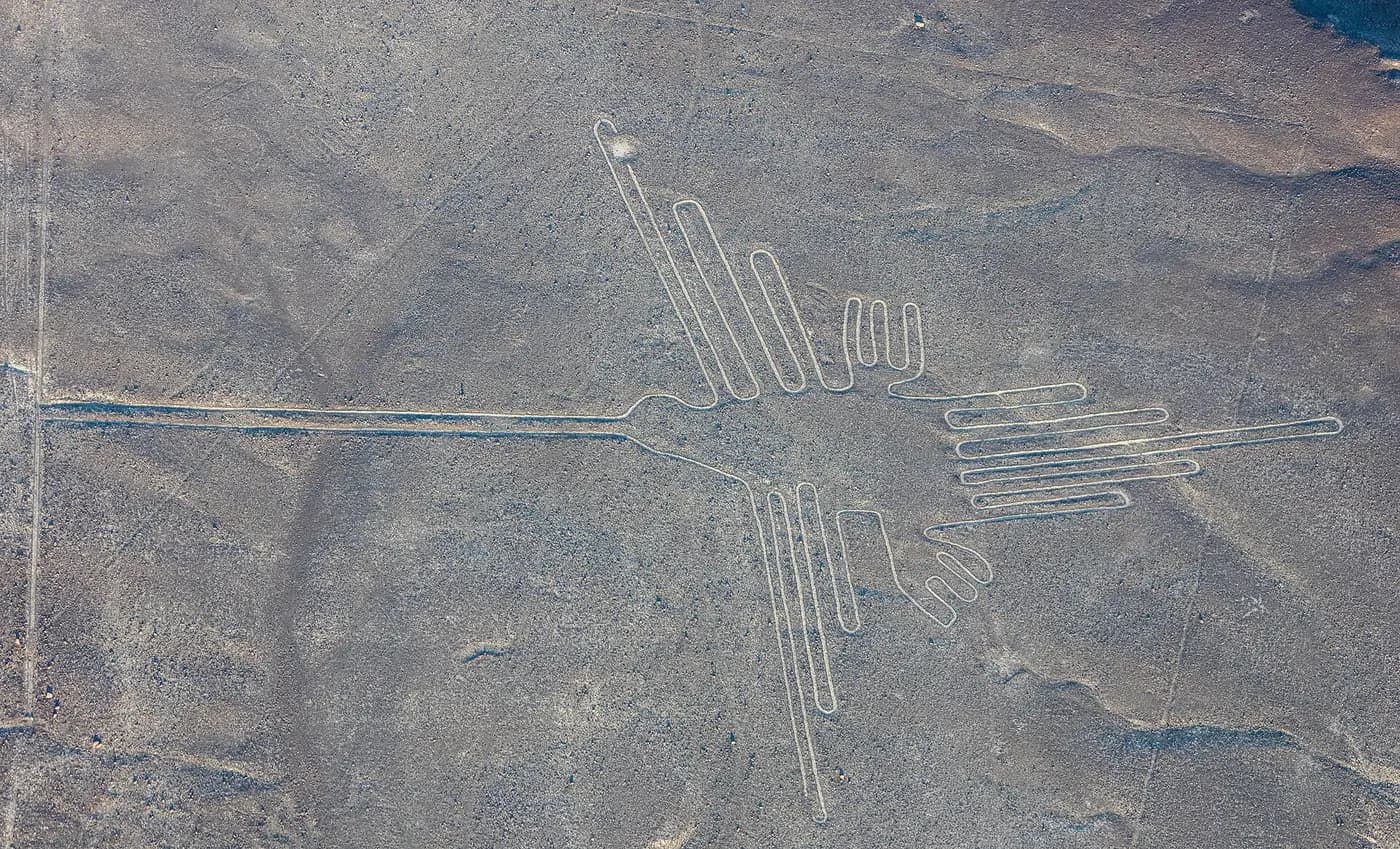
Between about 500 BC and AD 500 the Paracas and then the Nazca peoples scraped away the dark stones of the coastal desert to draw hundreds of straight lines, geometric shapes and some 70 animals and plants, among them a monkey, a hummingbird and a spider. Their purpose is still debated, most likely ritual and linked to water. The German mathematician Maria Reiche spent decades mapping and protecting them.
Sites
- Site 1: Mirador on the Pan-American HighwayRoadside tower looking down on the Hands and the Tree figures.Map ↗
- Site 2: Maria Reiche MuseumThe house where Reiche lived and worked, with her tools, plans and grave.Map ↗
- Site 3: CahuachiAdobe mounds of the Nazca ceremonial centre in the desert west of town.Map ↗
Guides who take you there
History-only · order never for saleWe haven't found an independent history guide for this yet. Guide here? Tell us about your tours.
More from the Ancient World




Read more: reference. Summary written by History-Tours.com.