16BCc. 16 BC–AD 400 · Trier
Augusta Treverorum, Roman Trier
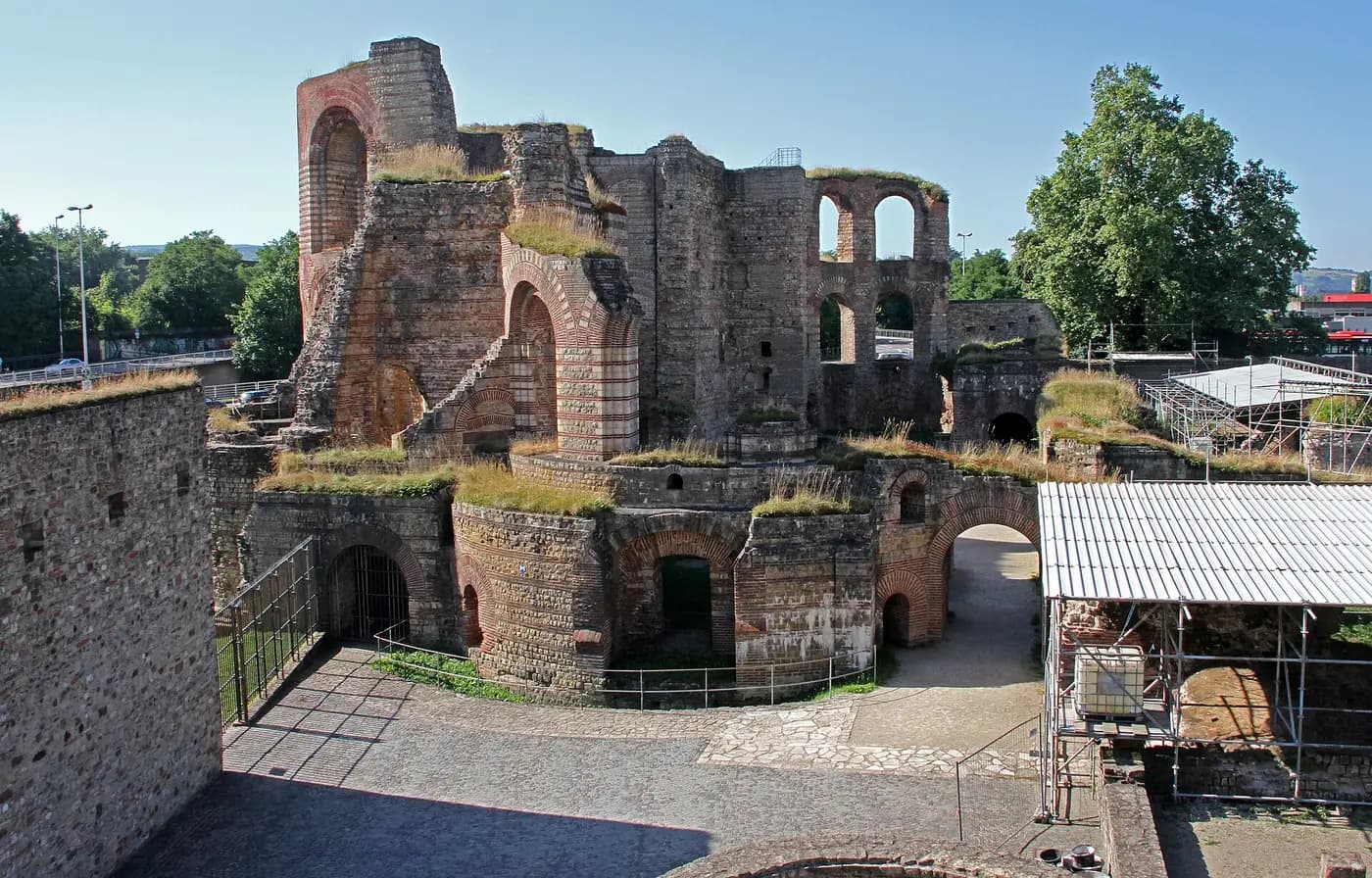
Founded on the Moselle under Augustus, Trier grew into the largest Roman city north of the Alps. From the late third century it was an imperial residence for the western empire, where Constantine lived from 306 and built the brick audience hall that still stands. Its city gate, baths, amphitheatre and bridge piers survive, beside a cathedral begun in the same century.
Sites
- Site 1: Porta NigraThe blackened sandstone city gate of about AD 170, kept because it became a church.Map ↗
- Site 2: Constantine's Basilica (Aula Palatina)Constantine's brick throne hall, now a Protestant church.Map ↗
- Site 3: Imperial Baths (Kaiserthermen)Walls and underground service tunnels of a fourth-century imperial bath complex.Map ↗
- Site 4: Rheinisches Landesmuseum TrierMosaics, the Neumagen wine-ship relief and a hoard of Roman gold coins.Map ↗
Guides who take you there
History-only · order never for saleWe haven't found an independent history guide for this yet. Guide here? Tell us about your tours.
Also in Trier and Luxembourg


More from the Ancient World




Read more: reference. Summary written by History-Tours.com.